
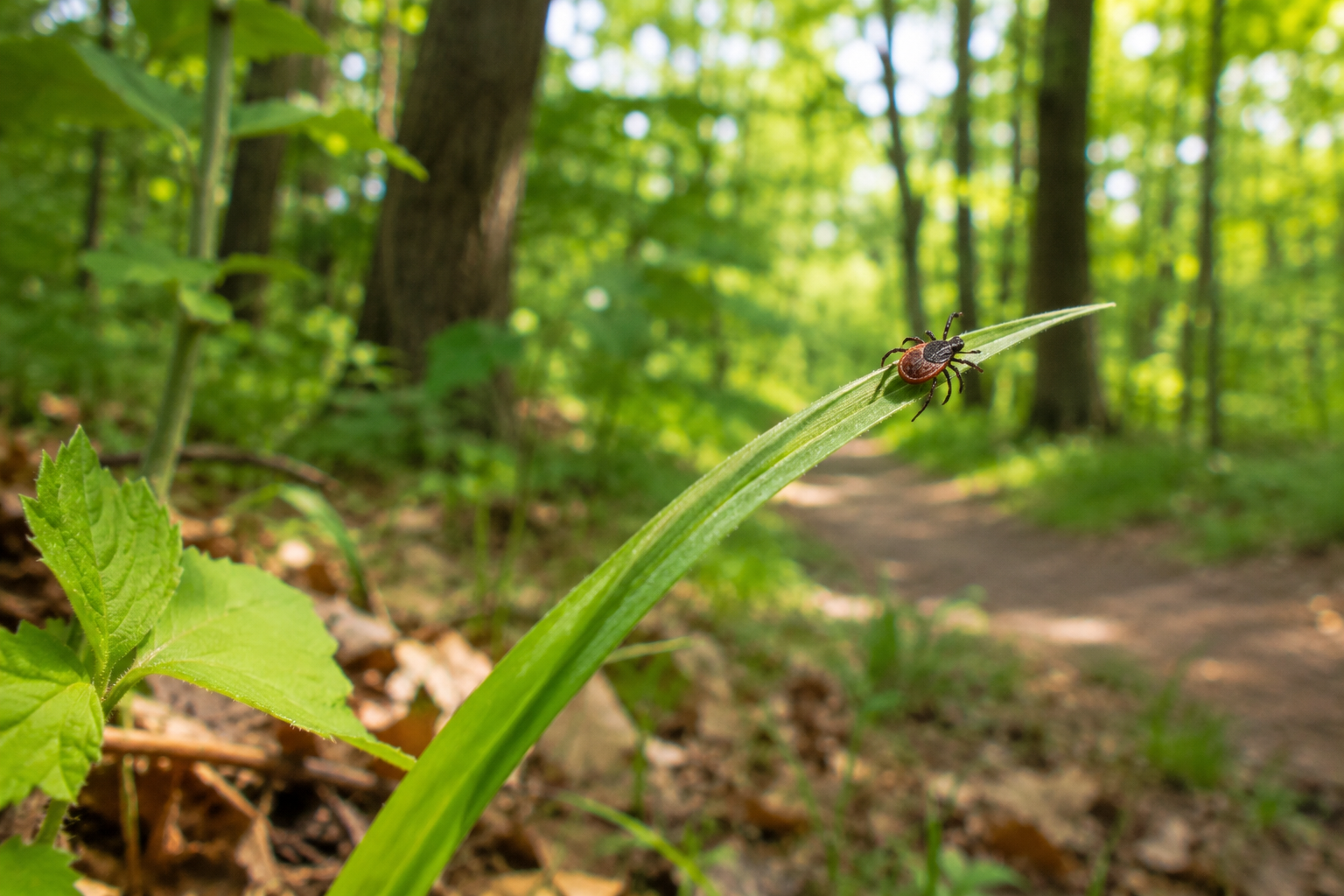
A rare tick-borne illness is drawing increased attention as cases rise across parts of the United States. Powassan virus is still uncommon, but its potential severity—and the speed with which an infected tick may transmit it—make it an important reminder that tick prevention should begin before you head outdoors.
What Is Powassan Virus?
Powassan virus is spread through the bite of an infected tick. In the United States, it is most often associated with blacklegged ticks, also commonly called deer ticks—the same ticks that can transmit Lyme disease.
According to the Centers for Disease Control and Prevention, most U.S. cases occur in the Northeast and Great Lakes regions from late spring through mid-fall, when ticks are most active. Although the disease remains uncommon, reported cases have increased in recent years.
Why Health Officials Take It Seriously
Initial symptoms may include fever, headache, vomiting, and weakness. In severe cases, Powassan virus can cause inflammation of the brain or the membranes surrounding the brain and spinal cord. This can lead to confusion, difficulty speaking, loss of coordination, seizures, and other lasting neurological complications.
There is currently no vaccine to prevent Powassan virus disease and no specific medicine to treat it. People who develop severe illness may require hospitalization and supportive care.
Another concern is how quickly transmission may occur. Unlike Lyme disease, which generally requires a tick to remain attached for an extended period, Powassan virus may be transmitted much sooner. That makes preventing the bite itself especially important.
Prevention Starts Before the Tick Check
Checking yourself, your children, and your pets after spending time outdoors remains essential. But when a pathogen may be transmitted quickly, prevention cannot depend on finding every tick before it has time to bite.
The CDC recommends several layers of protection:
- Use insect repellent when spending time outdoors.
- Wear long sleeves, long pants, and closed-toe shoes in wooded or brushy areas.
- Avoid tall grass and dense vegetation when possible.
- Perform thorough tick checks after coming inside.
- Shower soon after outdoor activity and inspect outdoor clothing and gear.
Make Your Clothing Part of Your Protection
Ticks typically begin their climb at ground level, moving from shoes and socks to pant legs before searching for exposed skin. Treating clothing and gear with permethrin adds protection directly to the surfaces ticks are most likely to encounter.
Duration Insect Repellent is designed for use on clothing and outdoor gear—not on skin. Treat hiking pants, socks, boot uppers, shirts, hats, backpacks, and other frequently used items before tick season or an outdoor trip. Once the fabric has dried completely, the treatment continues working through six weeks or six washings.
Powassan virus may be rare, but the broader lesson applies to every tick-borne illness: the best bite is the one that never happens. A combination of treated clothing, appropriate skin repellent, protective clothing, and careful tick checks gives you a stronger defense every time you step outside.
This article is general information and is not medical advice. If you develop symptoms after a possible tick exposure, contact a healthcare provider.
